There is a moment that happens at almost every growing law firm. Marketing is finally working. The pipeline is full. Leads are coming in faster than the firm can handle them. Consultations are getting booked four weeks out. Existing clients are waiting longer for updates. Attorneys are pulling 60-hour weeks. And the managing partner is staring at a marketing dashboard that says “more is better” while the operations team quietly drowns.
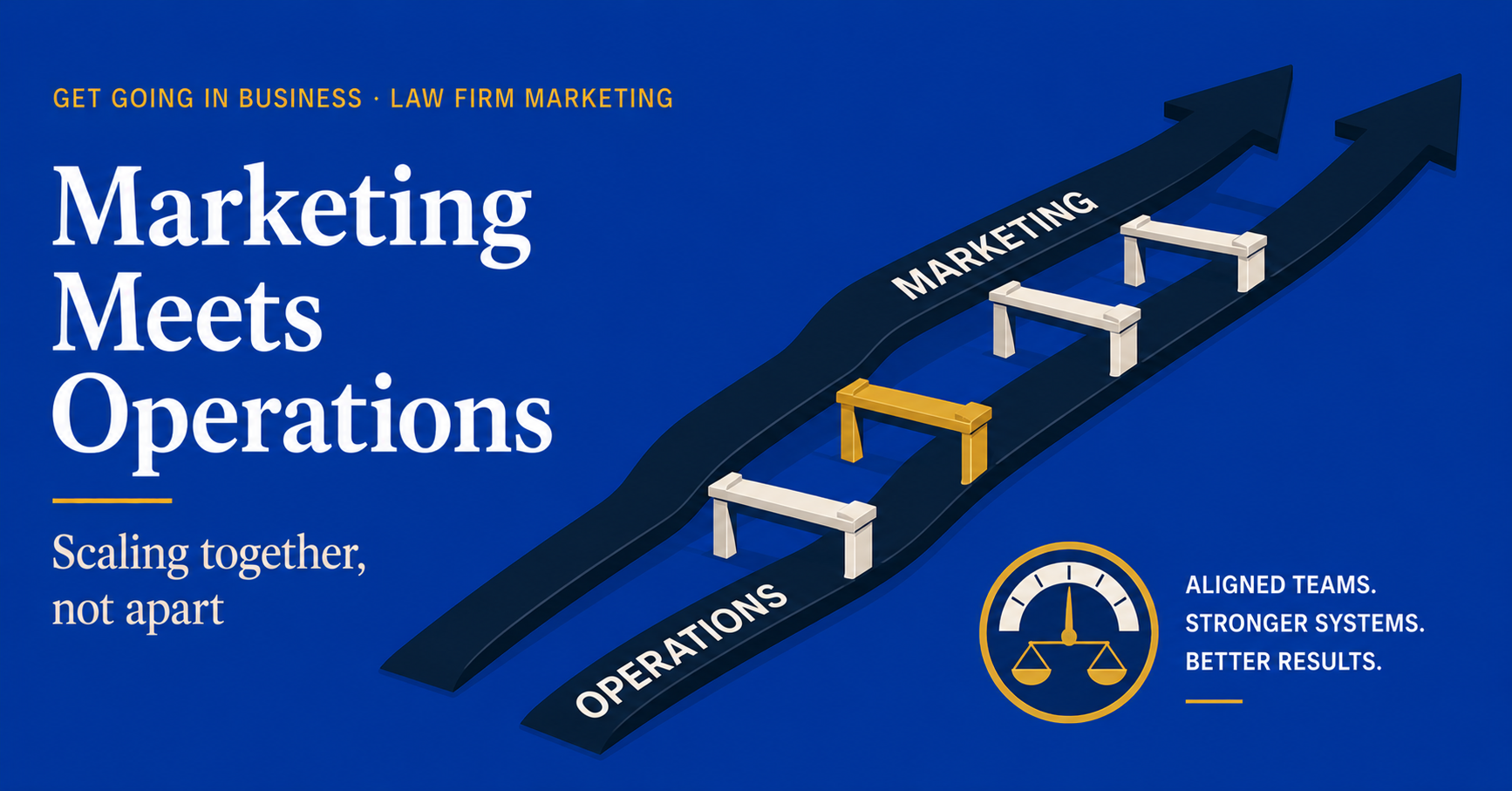
This is the marketing-operations gap. Marketing scales linearly with budget. Operations scales in steps, with hires and process changes. When the two grow at different rates, the firm hits a capacity wall. Every additional lead beyond that wall is wasted, every existing client suffers, and the firm’s reputation slowly erodes.
Law firm marketing and operations alignment is the discipline of keeping these two functions growing at compatible rates. Done right, it lets a firm scale smoothly. Done badly, it produces the worst kind of growth: visible to the outside, painful inside.
Why the Two Functions Grow at Different Rates
Marketing and operations have fundamentally different cost structures, which is why they get out of sync.
Marketing is mostly variable cost
Increase PPC spend by 30 percent and you get roughly 30 percent more leads, fast. The marginal cost of one more lead is roughly the same as the cost of the previous lead. You can scale marketing up and down in days, almost without limit.
Operations is mostly step-function cost
Going from 40 cases a month to 50 cases a month does not just cost 25 percent more. It often requires a new associate ($120,000 a year), a new paralegal ($60,000), or upgraded case management software. Operations capacity comes in chunks, and each chunk has a 3- to 6-month integration time.
The mismatch creates the gap
Marketing can add 30 percent more lead flow in a week. Operations cannot add 30 percent more case capacity in a week. The gap is where the alignment problem lives. When marketing outruns operations, every metric still looks good (more leads, more consultations) but the firm starts to break inside.
5 Signs You Have a Marketing-Operations Gap
Sign 1: Consultations are booked more than 2 weeks out
A healthy firm books consultations within 5 to 10 days. When you start booking 14 days out or more, demand is outrunning capacity. Some of those leads will not wait. They will book with a competitor whose calendar has space sooner. You are paying for leads to fund your competitor’s growth.
Sign 2: Existing client communication is slipping
Returned calls take longer. Email response times drift from same-day to 2 to 3 days. Case updates come less often. The intake team and the attorneys are spending their time on the front end (new leads, new consultations) at the cost of clients already on the books. Existing clients notice. Some of them leave reviews about it.
Sign 3: Quality of work is degrading
Filings get sloppier. Mistakes increase. Junior attorneys are doing work that used to go to senior attorneys. The firm is producing the same volume by lowering quality. Quality decline is the most expensive symptom because it shows up in case outcomes and reviews 3 to 6 months later, after the marketing budget has already done the damage.
Sign 4: Staff turnover is rising
People leave overworked firms. When marketing outpaces operations for more than two quarters, expect attrition. Each departure costs the firm 6 to 9 months of productivity and accelerates the gap because the remaining team is now doing more with less.
Sign 5: The managing partner is doing intake work or case work that should be delegated
This is the leading indicator. When the partner running the firm is fielding intake calls, drafting documents, or fixing operational issues that should be handled below them, the firm has hit its capacity ceiling. Continuing to scale marketing in this state makes everything worse, not better.
Marketing should only ever pull lead volume up to the level operations can absorb without quality decline. Past that point, marketing is destroying value, not creating it.
The Capacity Equation
Here is the simple version of the math that matters.
Maximum sustainable case volume = (Attorney hours available) ÷ (Hours per case) × (Quality factor)
Most firms can calculate the first two numbers but ignore the quality factor. A firm with 4 attorneys and 30 hours of available case-work time each per week has 480 hours per month. If average case requires 15 hours, theoretical capacity is 32 cases per month. The quality factor is usually 0.7 to 0.85 (accounting for sick days, training, client meetings, complications). Real sustainable capacity is 22 to 27 cases per month.
If marketing is delivering 35 qualified leads converting at 70 percent to consultation and 35 percent to retainer, that is 8 to 9 cases. Plenty of room. Scale marketing up.
If marketing is delivering 100 qualified leads converting at the same rates, that is 24 to 25 cases. You are at capacity. Adding more marketing budget will not produce more cases. It will produce more leads you cannot serve.
The Alignment Framework
Three structural changes keep marketing and operations growing at compatible rates.
Change 1: Capacity reviews before marketing budget reviews
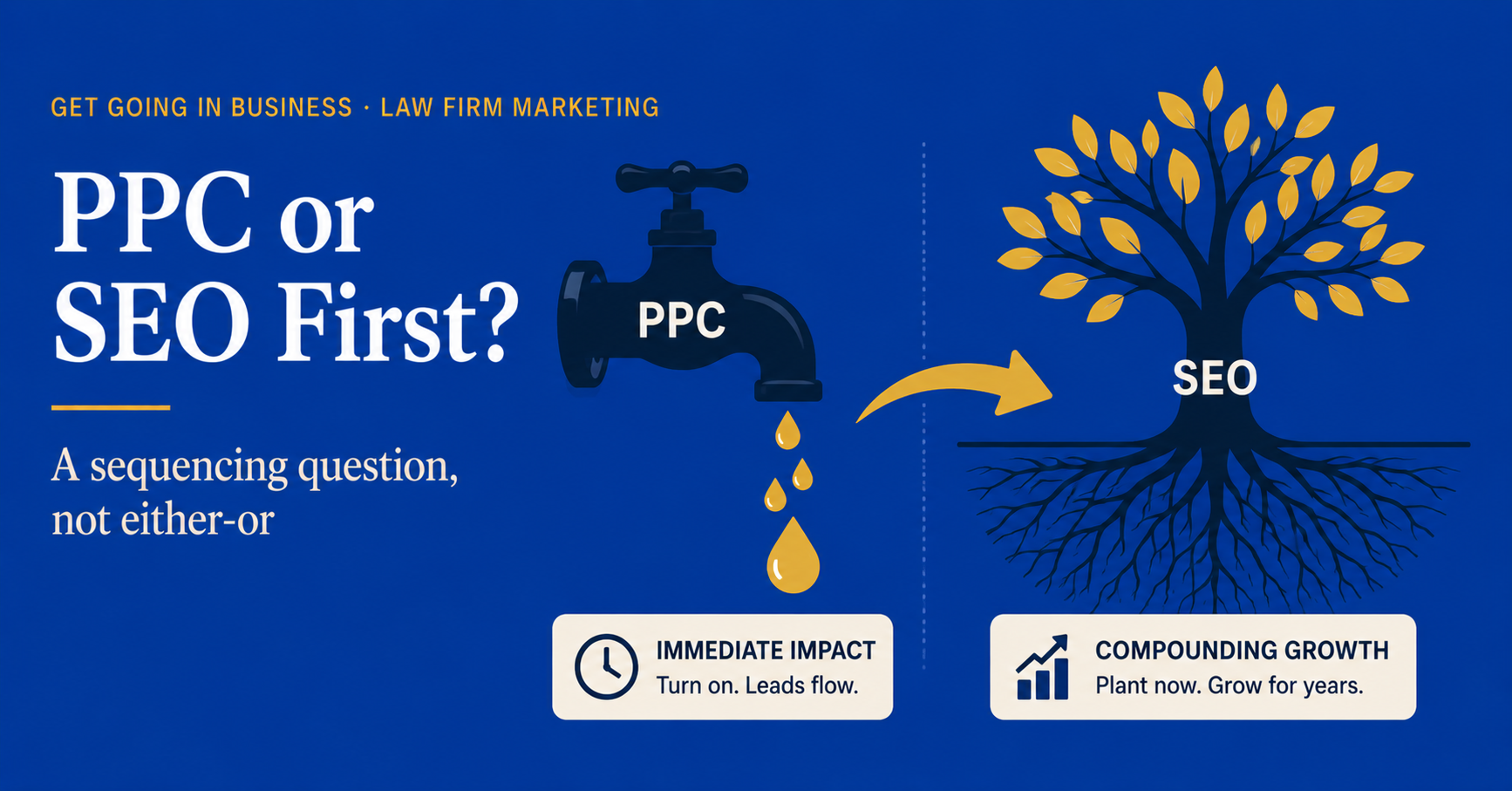
Most firms set the marketing budget first and then ask operations to keep up. Reverse the order. Every quarter, review operations capacity first: hours available, current utilization, quality indicators. Then set marketing budget to match. If operations cannot absorb more, marketing budget holds steady (or shifts to channels with longer payoff cycles like SEO).
Change 2: Lead-to-capacity ratio as a shared metric
Track this monthly: (Qualified leads per month × Expected close rate) ÷ (Sustainable case capacity per month). Healthy ratio is 0.7 to 0.9. Above 1.0, you are over-capacity and burning leads. Below 0.5, you are under-utilizing capacity and underspending on marketing.
Both marketing and operations teams should see this number weekly. It is the single best early warning system for capacity drift.
Change 3: A standing monthly marketing-operations meeting
Sixty minutes a month. Marketing lead, operations lead, managing partner. One agenda:
- Where is our lead-to-capacity ratio right now?
- What’s our forecast for next month, marketing side and operations side?
- Where are we likely to hit a constraint?
- What’s the one move we’ll make this month?
Without this meeting, marketing optimizes for its own metrics and operations optimizes for its own metrics, and the firm pays for the mismatch in lost cases and burnt-out staff.
When to Slow Marketing, When to Scale Intake
Slow marketing when:
- Lead-to-capacity ratio is above 1.0 for two consecutive months
- Existing client satisfaction metrics are dropping (review scores, response times)
- Staff turnover is above baseline
- Quality indicators are declining (case outcomes, complications)
Scale intake before scaling marketing when:
- Lead-to-consultation rate is below 40 percent (intake is the bottleneck)
- Same-day callback rate is below 70 percent (capacity is the issue, not demand)
- No-show rate is rising (intake quality, not volume, is the gap)
Scale marketing when:
- Lead-to-capacity ratio is below 0.6 and trending stable
- Operations team has capacity slack (above-baseline available hours)
- Existing client metrics are healthy
- Cost per signed client is profitable
The order matters. Scale intake first, prove the funnel works at higher volume, then turn marketing up. Scaling marketing first creates lead loss and reputation damage that takes 12 months to recover from.
The Connection to Everything Else
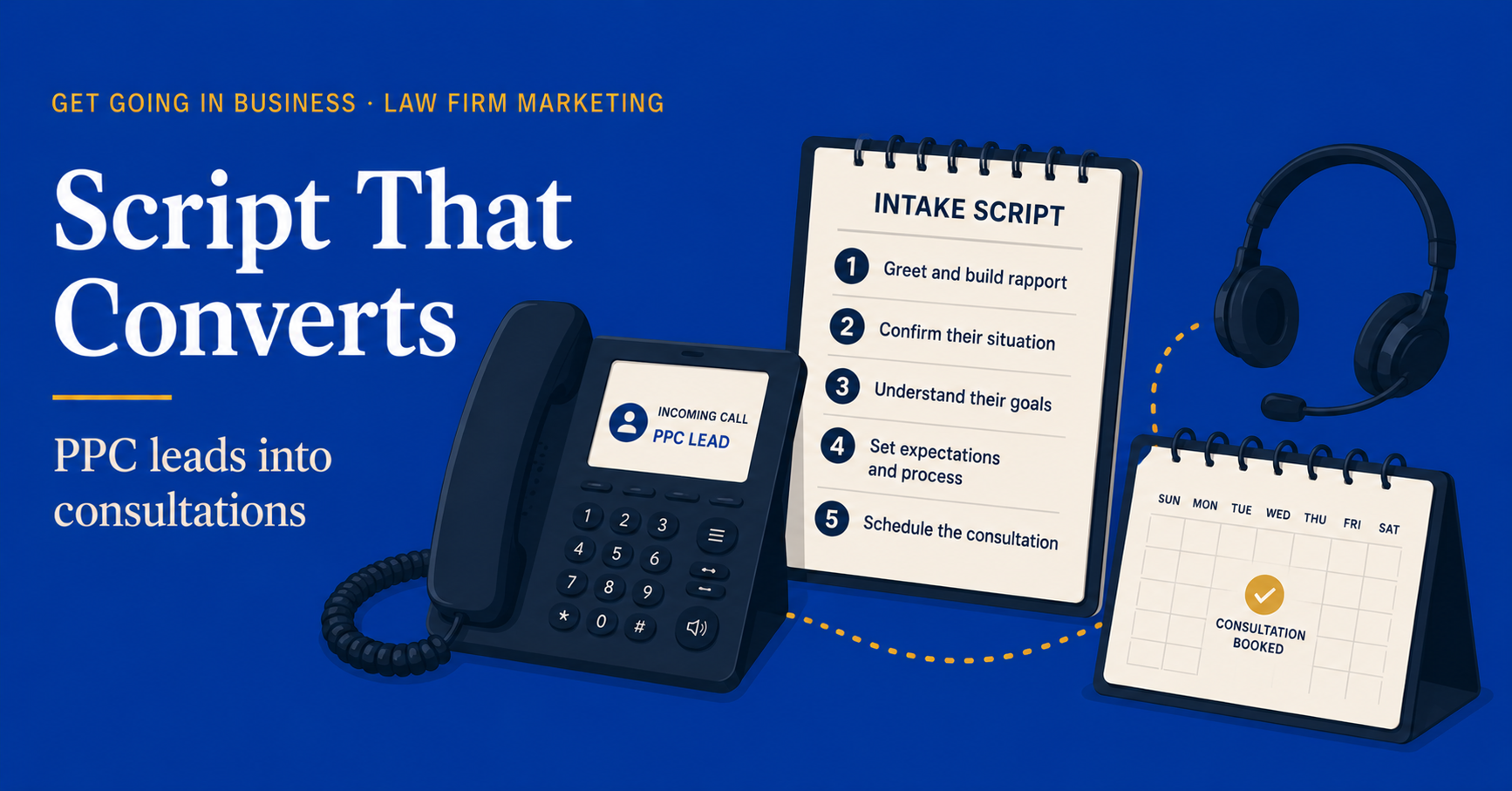
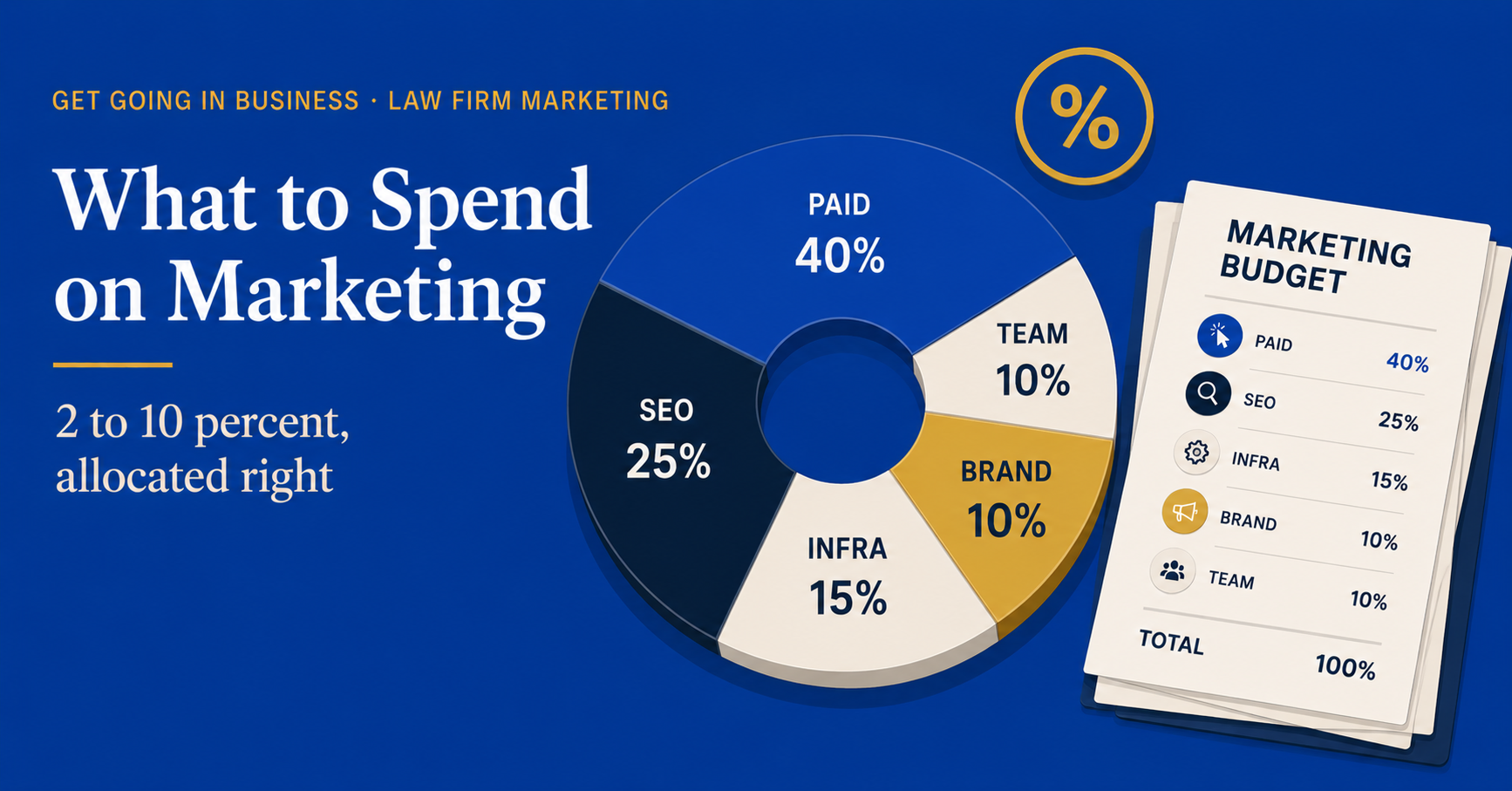
This is the final piece of the marketing operating system. The pillar of marketing organization, the audit of vendors, the alignment of intake and marketing, the dashboard and budget, the channel sequencing, the intake script. All of it depends on marketing and operations growing at compatible rates.
Without operations alignment, the rest is theater. You can audit your vendors perfectly and still drown the firm by scaling marketing past capacity. You can build the perfect intake script and still lose leads because consultation calendars are booked four weeks out. The alignment of marketing and operations is the discipline that lets every other improvement actually compound.
This is also why we keep coming back to the intake-marketing alignment problem. The two are deeply connected: intake is the bridge between marketing (volume) and operations (capacity). Get that bridge right and the whole system flows.
Frequently Asked Questions
Whose job is law firm marketing and operations alignment?
In firms below $3M in revenue, the managing partner. In firms $3M to $10M, the COO or operations director. Above $10M, a dedicated chief growth officer or director of revenue operations. Whoever it is, this is their primary job: keeping marketing and operations growing at compatible rates.
How often should we review the alignment?
Monthly at a minimum. Quarterly is too slow because capacity issues snowball within 60 to 90 days. Weekly is overkill for most firms unless you are in a fast-growth phase.
Can we just hire more people to keep up with marketing growth?
Sometimes, but hiring is a 3- to 6-month process before the new hire is fully productive. Marketing grows in weeks. If you wait until you need the hire to start hiring, you are already 4 months behind. Capacity planning should be 6 months ahead of marketing, not reactive to it.
What if our marketing is outside agencies and our operations is internal?
Same framework, harder execution. The outside agency does not naturally care about your operations capacity (they are not measured on it). The standing monthly meeting becomes more important. Include the agency. Share the lead-to-capacity ratio with them. The good agencies will adjust spend in response. The bad ones will keep pushing for more budget regardless. Their response tells you something.
Get Help Closing the Gap
If you have read all 12 articles in this series, you now have the full marketing operating system for a law firm: organized vendors, audited stack, working dashboard, healthy budget, aligned intake, sequenced channels, and now operations alignment. The pieces only work together when implemented as a system. We help law firms install the whole system in 90 days, not as a marketing project, but as an operations project that produces compounding results.
Want help building the bridge between your marketing and operations teams?
Book your free 15-min strategy call at getgoinginbusiness.com
Related: Why Your Law Firm’s Intake Team and Marketing Team Aren’t Aligned →